
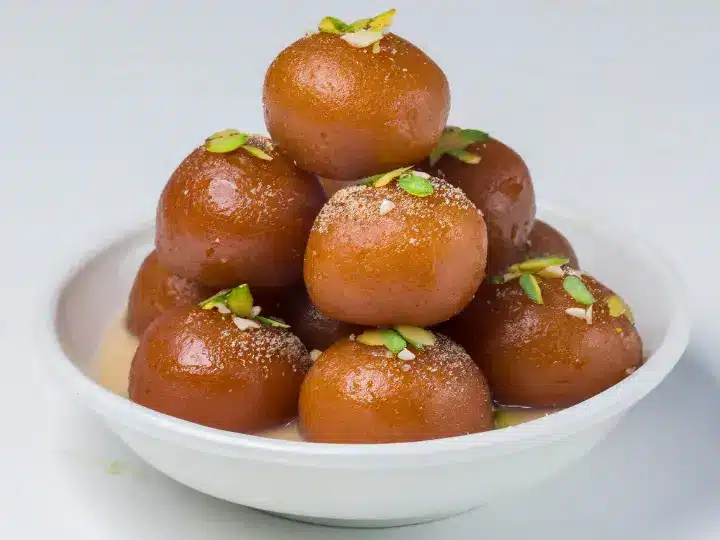
Gulab jamun has a quiet power over people. One look at that warm, glossy, syrup-drenched dessert and the craving appears instantly. It’s soft, sweet, aromatic and comforting in a way few desserts manage to be. And the best part is that each tiny piece holds layers of craft, tradition and technique. When planning dinner, try searching for an Indian restaurant around me and you’ll see how often gulab jamun shows up as a must-have because gulab jamun never fails to deliver that perfect, melt-in-the-mouth moment.
To truly appreciate why gulab jamun is loved across generations, let’s look at how it’s built and what it offers to our sweet tooth!
The Dough: The Beginning of Softness
The soul of gulab jamun lies in its dough. It starts with khoya, the slow-cooked milk solid that creates richness and softness. A touch of flour ties it together so the dough forms smooth, delicate balls that hold their shape without becoming heavy. When done right, the inside stays soft like a warm sponge, ready to absorb syrup evenly.
Slow Frying: Where Colour and Aroma Take Shape
Good gulab jamun isn’t rushed. The dough balls are fried on low heat so they develop a gentle, even golden-brown colour. Slow frying lets them cook all the way through without hardening the surface.
But it also does something else it builds that faint caramel edge that everyone recognises at the first bite.
The Syrup: Heart, Memory and Magic
Once fried, the balls are dipped in warm sugar syrup infused with cardamom, rose water or saffron. This is where gulab jamun truly becomes ‘the’ gulab jamun. The dough slowly absorbs the syrup until it becomes soft, fragrant and juicy from the inside out.
Small variations in the syrup change the personality of the dessert. A little extra rose water adds floral sweetness. A pinch of saffron deepens the aroma. Warm syrup keeps it tender without making it mushy.
The Flavour Profile: Simple Ingredients, Big Impact
Even though gulab jamun seems simple, its flavour is layered. The khoya adds creaminess.
The syrup adds sweetness and fragrance. The cardamom adds warmth. And the slow fry adds a soft caramel note.
Together, these elements create a dessert that’s sweet but never flat, rich but never tiring, classic yet always exciting to return to.
The Texture: Why It Melts Effortlessly
Texture is one of the biggest reasons gulab jamun is as popular as it is.The ideal piece breaks with the slightest touch and sinks on the tongue. The syrup inside keeps it moist, while the gentle crust from frying gives just enough structure to hold it together.
It delivers softness, warmth and sweetness all at once the kind of sensory combination that hooks people instantly.
Served Warm: A Simple Choice That Changes Everything
Gulab jamun is always best served warm. Warmth brings out the fragrance of cardamom.
Warmth softens the dough even more. Warm syrup feels soothing after a heavy meal.
At Jheel Restaurant, gulab jamun is served at the right temperature so each bite feels comforting, gentle and deeply satisfying.
Why It Wins Hearts Everywhere
Gulab jamun isn’t only about flavour; it’s also about feeling. It’s the dessert that appears at festivals, family gatherings, celebrations and everyday meals. And because it’s so familiar and nostalgic, it connects people to something warm and meaningful. A quick search for popular Indian restaurants near me will show you just how many places brag about their gulab jamun.
It’s simple, humble and universally loved which is why it appears on every dessert menu, from casual diners to most Indian restaurants.
That is why, we welcome you to enjoy soft, warm, perfectly crafted gulab jamun at Jheel Restaurant, where each piece is made to melt, comfort, and leave you wanting just one more.
FAQs
- Is gulab jamun junk food or not?
Not exactly. Gulab jamun is a dessert, so it’s rich and sweet, but it’s not processed junk food. It’s made from milk solids, flour, sugar, and natural flavourings. - Can gulab jamun be made without frying?
Yes, some recipes bake or air-fry gulab jamun, but the texture and flavour are slightly different from the classic fried version. - Why do gulab jamun sometimes turn hard or dry inside?
This usually happens when the dough is over-kneaded, fried too quickly on high heat or soaked in syrup that’s too thick or too cold. - Is gulab jamun always made from khoya?
Traditionally, yes, but some versions use milk powder or paneer when khoya isn’t available. These alternatives still give a soft and tasty result, though the flavour may differ slightly.
